


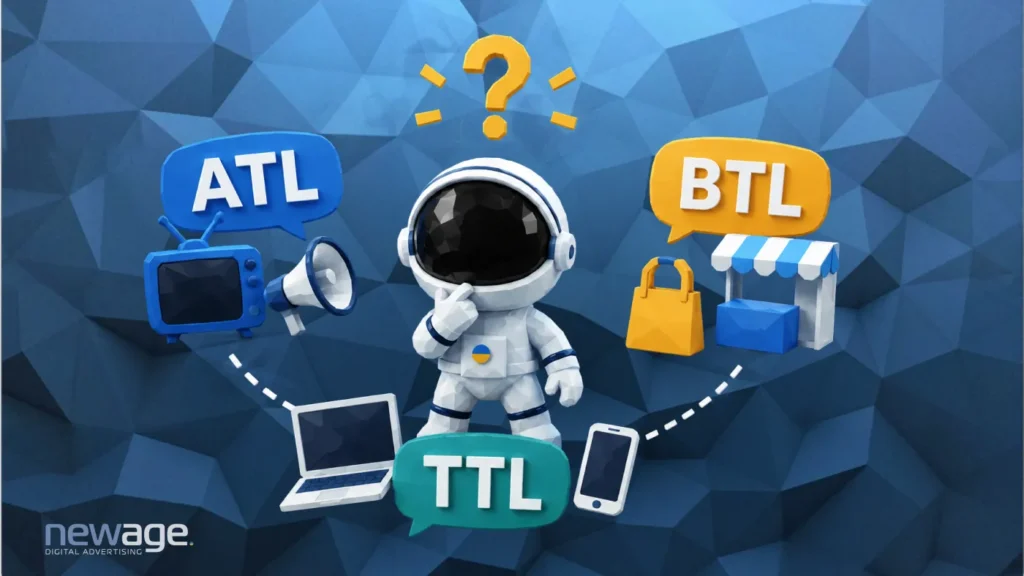
ATL marketing focuses on mass communication and broad reach through channels such as television, radio, print, and outdoor advertising. BTL marketing targets specific audience segments through more direct and personalized activities, while TTL marketing combines both approaches to create an integrated communication strategy.
In this article, we explain what ATL, BTL, and TTL mean in marketing, how ATL vs BTL approaches differ, and which channels, formats, and use cases are associated with each.
What Do ATL and BTL Mean in Marketing?
ATL stands for Above The Line, while BTL stands for Below The Line. These terms describe two traditional approaches to marketing communication. ATL focuses on reaching a broad audience through mass-media channels, while BTL is associated with more targeted and direct communication with specific audience segments. TTL, or Through The Line, combines elements of both approaches.
The terminology of ATL and BTL took shape in the mid-twentieth century, when the primary advertising channels were television, radio, and print. During this period, companies actively increased their mass-advertising budgets, creating the need to distinguish media expenses from tactical promotional tools.
According to a popular legend, the distinction originated at Procter & Gamble. In the advertising budget, the expenses for mass media were included in the main section, while product sampling, coupons, contests, and other promotional activities were written below the line. This is how the concepts “above the line” and “below the line” supposedly appeared. Although not a confirmed fact, the legend accurately reflects the logic of that period’s approach.


In reality the difference was pragmatic: media advertising was paid through agency commissions, while promotional activities were paid for separately, which resulted in two distinct types of budgeting and planning.
With the development of digital media, the line between ATL and BTL began to blur. New tools emerged that combined mass reach with targeted consumer interaction. This led to the TTL approach, Through The Line, an integrated model that enables a unified communication pathway and combines both strategies.
ATL vs BTL vs TTL: Key Differences
The main difference between ATL, BTL, and TTL marketing lies in how broadly a campaign reaches its audience, how precisely it can be targeted, and what role it plays in the customer journey. ATL is primarily associated with mass reach and brand awareness; BTL with targeted communication and direct response; while TTL combines both approaches within one integrated strategy.
| Characteristic | ATL (Above The Line) | BTL (Below The Line) | TTL (Through The Line) |
|---|---|---|---|
| Audience | Broad, mass audience | Specific audience segments | Broad and targeted audiences |
| Main objective | Brand awareness and reach | Engagement, leads and actions | Awareness and action across the customer journey |
| Targeting | Limited or broad | More precise and personalized | Combines broad reach with targeted communication |
| Communication | Primarily mass communication | Direct and more personalized | Integrated across multiple touchpoints |
| Measurability | Traditionally more difficult to measure directly | Typically easier to connect with specific actions | Depends on the channels and campaign setup |
| Typical channels | TV, radio, print, outdoor advertising | Direct marketing, promotions, events, targeted digital activities | Integrated campaigns combining ATL and BTL channels |
| Best suited for | Building reach and brand awareness | Driving engagement or specific actions | Connecting brand building with performance objectives |
In practice, the boundaries between ATL and BTL are less rigid than they once were. Digital channels, in particular, can support either broad-reach or highly targeted campaigns depending on the campaign objective, audience strategy, and media setup. TTL marketing brings these approaches together, allowing brands to build awareness at scale and continue communicating with more specific audience segments across the customer journey.
What Is ATL Marketing (Above The Line)?
ATL (Above The Line) is a traditional marketing approach that uses mass communication channels to reach the widest possible audience. This method helps build brand awareness, shape the brand’s image in the minds of consumers, and maintain overall market presence.
ATL focuses on media advertising in offline channels and certain modern mass media that allow communication with large, broadly defined audiences and provide extensive reach.
Types and Examples of ATL Advertising
ATL advertising includes formats that work with broad audiences and provide large scale brand visibility. These channels help anchor the brand in the public space and maintain long term recognition.
Outdoor Advertising
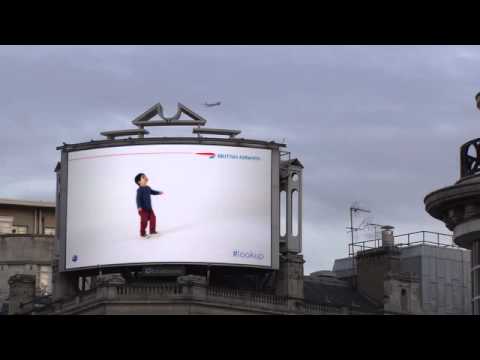
Billboards, city lights, building banners, and transit advertising all fall under outdoor ATL advertising. It is constantly present in the urban environment, attracts the attention of large groups of people and builds brand recognition through scale and frequent contact. Some forms of OOH advertising even cross into the realm of visual art. An example is the British Airways #lookup campaign:
Radio
Radio advertising remains a noticeable ATL marketing tool despite the active growth of digital media. It reaches audiences on the move in the car, at work, or at home, and provides a high repetition frequency, which supports strong recall. In addition, the linkage of FM frequencies to local transmitters makes radio especially effective for regional and local businesses.
Television
Television advertising remains one of the key tools of ATL marketing. It offers massive reach, strong multisensory impact through the combination of video, audio, and text, and a wide range of creative formats. Despite the high cost of production and placement, TV advertising is still one of the most effective ways to quickly increase brand awareness and influence consumer preferences.
Although television has lost part of its audience in recent years due to the shift toward digital, it still provides substantial reach, especially during major broadcasts. A telling example is the United States, where a 30-second slot during American football games can cost around 7 million dollars. Brands produce separate high-budget commercials for such placements, turning them into events in their own right, such as exclusive teasers for new movies or animated films.

Print Media
Advertising in print media covers several types of publications. Newspapers allow communication with broad local audiences, magazines enable more precise targeting based on interests or demographics, and specialized publications are ideal for niche topics and professional communities.
Among the key advantages of print advertising is the high level of audience trust. The very act of choosing a printed publication over other channels indicates a certain loyalty from readers. Another benefit is the longevity of contact. Printed materials are kept longer, which increases the likelihood of repeated exposure. In addition, print allows for substantial amounts of text and high-quality visuals, making it possible to present a product or offer in greater detail.
YouTube
Although YouTube is typically associated with digital marketing, large-scale advertising campaigns on this platform can be considered ATL. The platform provides extensive reach, offers a wide range of formats, and has strong potential for organic content distribution. At the same time, YouTube combines the mass nature of traditional ATL advertising with key digital advantages such as flexible targeting, analytics and the ability to adapt creatives for different audiences.
Because of this, YouTube has become one of the most versatile media channels today. An example is the Volkswagen 2024 commercial:

Advantages and Disadvantages of ATL Advertising
ATL advertising has several strong advantages as well as a number of limitations that should be considered when planning marketing activities.
Advantages of ATL advertising:
- Mass reach. ATL channels make it possible to quickly deliver a message to a large number of people, which is especially important for increasing brand awareness.
- Image building. Mass media help create and maintain the desired brand image, reinforcing it in the minds of the audience.
- Audience trust. Traditional media are often perceived as more reliable and authoritative, which can strengthen trust in a product or company.
- Prestige. Presence in major media outlets is often associated with brand stability and a strong market position.
Disadvantages of ATL advertising:
- High cost. Media placements and creative production can require substantial budgets.
- Limited targeting. The mass nature of ATL advertising makes it difficult to precisely target specific audience segments.
- Lack of interactivity. Traditional channels do not enable direct interaction with the audience, which can reduce engagement.
- Difficulty in measuring effectiveness. Evaluating the performance of ATL campaigns is challenging. More on this can be found in the article “Measuring media campaigns”.
- Limited flexibility. Adjusting a campaign after launch is often difficult, expensive or impossible.
What Is BTL Marketing (Below The Line)?
BTL (Below The Line) is a marketing approach focused on targeted and personalized communication with specific audience segments. Unlike ATL, which prioritizes mass reach, BTL activities are designed to create more direct interaction with potential customers and encourage measurable actions.
Examples and Types of BTL Advertising
Traditionally BTL activities include:
- product demonstrations and tastings
- large events such as presentations, seminars, press conferences, parties
- lotteries
- contests
- sponsorship
- promotional merchandise
- packaging design
- merchandising
- advertising in interactive communication channels and more.
Despite the wide range, there is still no single universal definition of what exactly falls “below the line”. Interpretations of BTL may vary among specialists, as certain tools appear or disappear from the list over time. However, the essence of the approach remains unchanged.
Promotional Activities
Promotional activities are one of the most common formats of BTL advertising. They include in-store tastings, presentations of new products, and distribution of free samples in shopping malls or directly on the street. Such activities allow consumers to interact with the product firsthand: taste it, experience its aroma or texture, or evaluate its functionality. This significantly increases the likelihood of a future purchase, as a real “hands-on” experience is far more convincing than any advertising message.
Sponsorship
Sponsorship is one of the effective tools of BTL marketing that helps associate a brand with specific values, events, or communities. It may include supporting sports teams, cultural events, charitable initiatives or individual talented personalities. Through such collaboration, a brand not only gains additional visibility but also builds a positive image in the eyes of its target audience by demonstrating involvement in areas that matter to them.
Performance Advertising
Performance advertising shares many characteristics with BTL marketing because it typically focuses on specific audience segments and measurable actions, such as website visits, purchases, lead form submissions, or registrations.
However, modern digital advertising does not always fit neatly into the traditional ATL/BTL classification. Depending on the campaign objective, targeting, and reach, digital channels can perform ATL, BTL, or TTL functions. Performance campaigns are most closely associated with BTL when they prioritize targeted communication and direct response.
Analytics and automation tools play an important role in this approach as they make it possible to monitor performance in real time and optimize campaigns with the help of algorithms.
Direct Mailings
Direct mailings remain an effective tool for personalized communication with potential customers. These can include messages in messengers with catalogs or special offers, email newsletters with promo codes, or SMS notifications about promotions and discounts. The main advantage of this approach is the ability to precisely target and deliver relevant messages directly to specific consumers.
Other BTL advertising formats include:
- Interactive installations. They attract attention through originality, engage the audience in interaction, and are highly memorable.
- Viral marketing. Based on creating content that people willingly share on social media allows brands to achieve significant reach with relatively low costs.
- Loyalty programs. Bonus points, personalized offers, or club privileges help build long-term customer relationships and encourage repeat purchases.
- Product placement. Featuring a product or brand logo in film series or video games allows the advertising message to be organically integrated into entertainment content.
All these formats share a common goal: creating a personalized interactive experience for the consumer. This strengthens the emotional connection with the brand and supports the growth of customer loyalty.
Advantages and Disadvantages of BTL Advertising
BTL advertising has its strengths and limitations which define its role within an overall marketing strategy. Let us look at them in more detail.
Advantages of BTL advertising:
- Targeting and personalization. BTL enables working with clearly defined audience segments and delivering highly relevant messages.
- Interactivity. Many BTL tools involve direct interaction with people, which helps create a deeper and stronger connection with the brand.
- Measurable results. Most activities allow precise tracking of performance, assessing conversions, and optimizing the campaign.
- Flexibility. BTL tools can be easily adapted to changes in the market audience or product, often even during the campaign itself.
- Creativity. BTL formats provide more room for unconventional ideas that can make a brand stand out and capture attention.
Disadvantages of BTL advertising:
- Limited reach. Compared to ATL, BTL usually covers a smaller audience, which can be a drawback for mass market brands.
- Labor intensity. Many activities require significant human resources, detailed organization, and time to implement.
- Difficulty scaling. Effective local campaigns are not always easy to expand to a national or international level.
- Short-term effect. BTL solutions often work in short bursts and therefore require regular repetition.
- Higher cost per consumer. Although the overall budget may be lower, the cost of reaching or converting a single customer can sometimes be higher than in mass ATL campaigns.
What Is TTL Marketing (Through The Line)?
TTL (Through The Line) is an integrated approach to marketing communications that combines elements of both ATL and BTL strategies. It enables working simultaneously with a mass audience and specific segments while building a unified consumer interaction pathway.
This format emerged as a response to the need for more flexible and effective marketing solutions in the digital era, where the boundary between mass and targeted communication is gradually disappearing.
Examples of TTL Advertising
TTL solutions combine the reach of mass channels with the ability to engage consumers through personalized interaction. These are formats in which ATL and BTL tools operate simultaneously, complementing one another and creating a unified communication experience.
Interactive Billboards
Outdoor advertising (ATL) enhanced with QR codes or NFC technology that allows users to instantly visit a website, activate a coupon, share their contact information, or receive a special offer on their smartphone (BTL). This format combines broad reach with personal engagement at the moment of interaction with the advertisement.
Print Advertising with Augmented Reality
Magazines or posters (ATL) that come to life when viewed through a smartphone with a dedicated application (BTL). This can include video, additional product details, interactive three-dimensional elements, or gamified content. Thanks to AR, print advertising extends beyond a static image and creates a new level of interaction.
Radio Advertising Campaigns with Interactive Elements
Traditional radio advertising (ATL) that invites listeners to visit a landing page, take part in a giveaway, receive a promo code via SMS, or visit the brand’s social media page (BTL). This approach transforms a one-way audio message into an active engagement mechanism.
Advantages and Disadvantages of TTL Advertising
TTL advertising combines the capabilities of ATL and BTL, so its effectiveness largely depends on the right balance between mass and personalized communication. Let us look at the key advantages of this approach.
Advantages of TTL advertising:
- Comprehensive approach. TTL makes it possible to build cohesive marketing campaigns in which mass and targeted channels work in a coordinated and complementary way.
- Synergistic effect. Combining different formats and types of communication strengthens the overall impact of the campaign, making it more noticeable and effective.
- Wide reach with personalization. TTL communication can simultaneously cover a broad audience while adapting messages for specific segments or user groups.
- Flexibility and adaptability. Such campaigns are easy to adjust by adding new tools or changing priorities depending on market conditions or audience behavior.
- Budget optimization. TTL enables allocating resources across channels according to their effectiveness, reinforcing the tools that deliver the best results.
- Improved customer interaction. Integrating multiple touchpoints ensures deeper engagement and supports the customer through every stage of the purchase journey.
Disadvantages of TTL advertising:
- Complex coordination. Integrating different communication channels requires careful planning, synchronization, and thoughtful management, which can complicate campaign execution.
- Higher initial cost. Developing and launching a TTL strategy usually requires larger upfront investments compared to standalone ATL or BTL campaigns.
- Difficulty measuring effectiveness. Evaluating the performance of an integrated campaign is more complex than measuring individual digital channels. At the same time, TTL offers more transparency than traditional offline tools.
- Need for diverse expertise. High-quality TTL implementation requires a team with knowledge across various areas, including marketing analytics, technology, and creativity.
- Risk of overload. Using many channels simultaneously can lead to information fatigue for the audience and reduce communication effectiveness.
- Technological challenges. Combining different platforms, CRM systems, advertising tools, and analytics solutions can cause technical difficulties and require additional resources.
TTL advertising, despite these limitations, continues to grow in popularity because it can create comprehensive, coordinated, and effective marketing strategies. It helps brands adapt to a multichannel environment and the dynamic behavior of modern consumers.
ATL vs BTL: Which Approach Should You Choose?
The choice between ATL and BTL marketing depends on the campaign objective, the audience you want to reach, and the type of response you expect from consumers. Neither approach is universally better — they serve different roles within a marketing strategy.
ATL marketing is generally a better fit when the goal is to:
- reach a large audience;
- build or strengthen brand awareness;
- introduce a brand or product to the market;
- maintain broad visibility across mass-media channels.
BTL marketing is more suitable when the goal is to:
- communicate with specific audience segments;
- personalize marketing activities;
- encourage engagement or a particular action;
- generate leads, sales, registrations, or other measurable responses.
ʼIn many cases, brands do not have to choose between ATL and BTL. A TTL strategy can combine broad-reach communication with targeted activities at different stages of the customer journey. For example, a brand may use video or outdoor advertising to build awareness and then reach relevant audience segments with more targeted digital campaigns.
The right approach depends not only on the channel itself, but also on how it is used, who it reaches, and what business or marketing objective it is designed to achieve.
Conclusion
ATL, BTL, and TTL play different roles in marketing communication. ATL provides scale and brand awareness, BTL enables more targeted interaction and measurable actions, while TTL combines both approaches within an integrated strategy.
In today’s multichannel environment, the boundaries between these approaches are increasingly flexible. The right strategy depends on the campaign objective, audience, channels, and desired outcome rather than on choosing ATL, BTL, or TTL in isolation.
FAQ: Common Questions about ATL, BTL, and TTL
What does ATL mean in marketing?
ATL stands for Above The Line. In marketing, it refers to activities designed to reach a broad audience and build brand awareness at scale. Traditional ATL channels include television, radio, print, and outdoor advertising, although digital channels can also perform an ATL role when used for mass reach.
What does BTL mean in marketing?
BTL stands for Below The Line. BTL marketing focuses on more targeted and direct communication with specific audience segments. Typical BTL activities include promotions, events, direct marketing, loyalty programs, and other formats designed to encourage engagement or a specific consumer action.
What is the difference between ATL and BTL marketing?
The main difference between ATL and BTL marketing is their approach to audience reach and communication. ATL primarily focuses on reaching large audiences and building brand awareness, while BTL targets more specific audience segments and encourages direct interaction or measurable actions.
What is TTL marketing?
TTL stands for Through The Line. TTL marketing combines ATL and BTL approaches within an integrated strategy. It allows brands to build broad awareness while also using targeted communication to engage specific audiences and guide them through different stages of the customer journey.
Can digital advertising be ATL or BTL?
Yes. Digital advertising can perform either an ATL or BTL role depending on how a campaign is designed. A large-scale video campaign focused on reach and awareness can function as ATL, while a highly targeted campaign focused on leads, purchases, or other specific actions can function as BTL. Digital campaigns can also combine both approaches as part of a TTL strategy.