

May 23, 2022
In 2021, we worked with a BMW customer on their BMW Lifestyle related products store. And in this case study, Senior Traffic Manager newage Vlad Bilousov will talk about the major discoveries and life hacks that we have gained from this experience.
The Year Of BMW Lifestyle Promotion: Growth Points For E-Commerce
May 23, 2022
In 2021, we worked with a BMW customer on their BMW Lifestyle related products store. And in this case study, Senior Traffic Manager newage Vlad Bilousov will talk about the major discoveries and life hacks that we have gained from this experience.
Vlad Bilousov
In 2021, we worked with a BMW customer on their BMW Lifestyle merchandise store. And in this case, Senior Traffic Manager newage. Vlad Bilousov will talk about the main discoveries and life hacks that we have gained from this experience.
The Background
The BMW Group is known globally for its cars: BMW itself, Rolls-Royce, MINI, Motorrad, and others. But in addition to dealerships, Ukraine has a store for fans of the brand. It sells everyday goods under the concern’s brands; from souvenirs and children’s toys to clothes and electric bicycles.
The products of this store cost much more than the alternatives from the mass-market, but such a high-margin, branded merch is really in demand among brand fans.
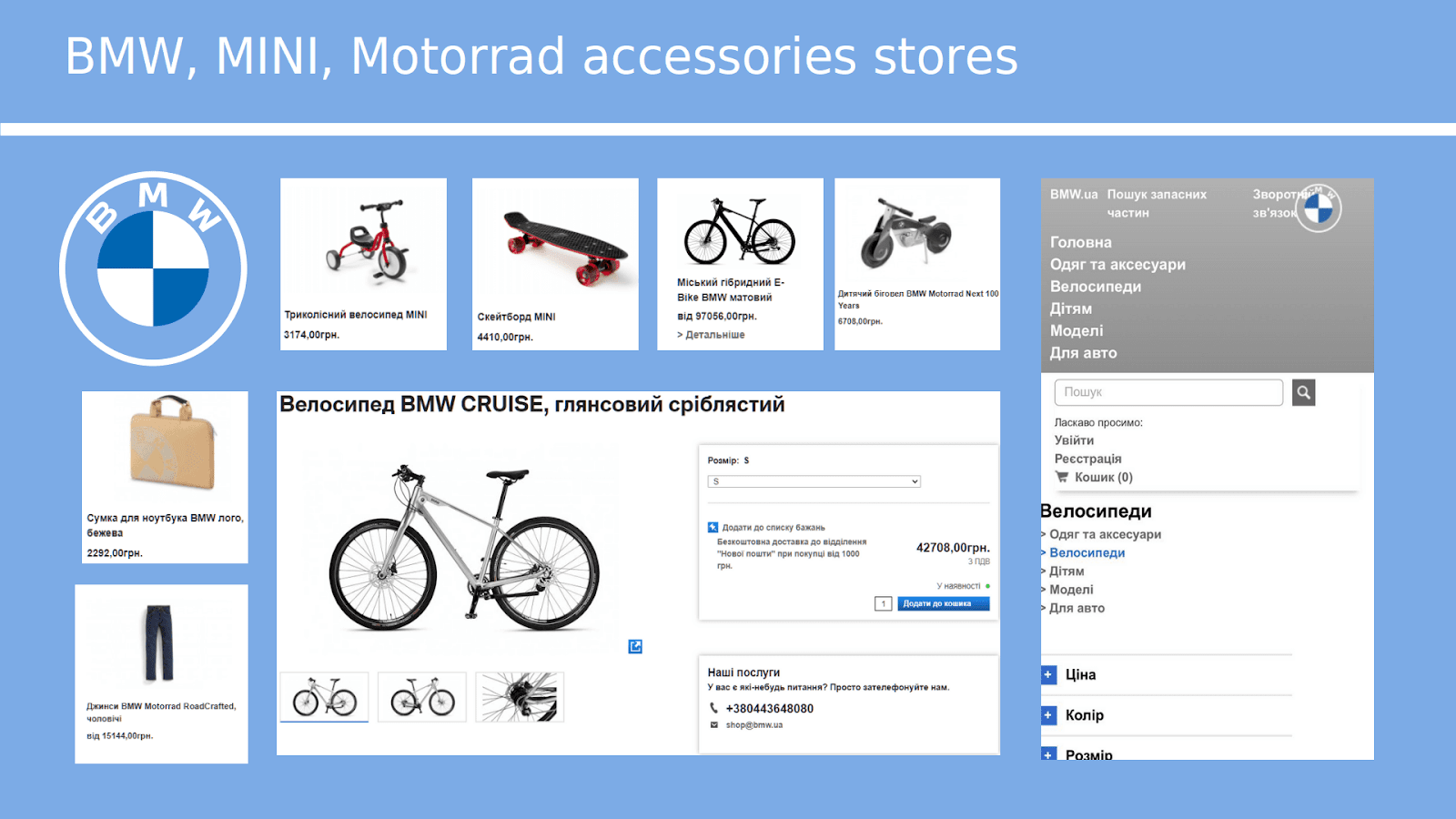
At the same time, the store needs some redesign to make it more convenient to use. The customer is already working on this with another contractor, so we can objectively admit that the lack of adaptability of the website could discourage some visitors from making purchases.
Our Challenge
During the year, we launched advertising for the store with various goals: from brand awareness promotion of individual brands to performance campaigns. Our overall goal was to increase sales at the Lifestyle store.
To do this, we had to ensure the constant presence of the online store’s products in search results (including among ads in the Shopping page). We also sought to increase the effectiveness of the campaign, gradually reducing the cost of conversion.
Previously, we set up a campaign based on Behaviour-based Audience Segmentation for BMW. Read about it in the BMW Case Study.
Our approach
Tools
In 2021, we expanded our advertising tools compared to 2020. In the “covid” year, we used only search campaigns and drove traffic to the site using the “Maximum Clicks” strategy, without the ability to optimize for conversion. There was also an ad on Google Shopping, where we had to manually update the feeds. Instead, in 2021, we improved our existing channels and expanded our pool of tools.
- In search advertising, we changed our strategy to maximize conversions with a target CPA, which allowed us to optimize for targeted actions. In addition, we assigned a value to conversions according to their place in the funnel and tested conversion strategies, such as target price per conversion.
- Smart Shopping. We’ve switched from regular shopping to Smart in late 2020, and new ads are actually showing their effectiveness. About 70% of conversions come from Smart Shopping. This has greatly automated our processes, as now we spend much less time editing feeds.
- Brand Awareness advertising. From 2021, we started actively launch brand awareness campaigns: both for special offers, such as Christmas or Black Friday, and specific products (scooters, tires, etc.).

Insight. We’ve determined that the most effective strategy for this campaign is to maximize the value of conversions. This is suitable for accounts where there are different actions (add to cart, start registration, purchase), which are important to track and take into account when optimizing. This strategy has helped us increase the number of major conversions, and purchases, with a moderate increase in CPA. We also used this strategy for the shopping campaign, when it proved its effectiveness.
Impact of Brand Awareness Advertising on CPA
The graph below shows how the CPA has changed over the past two years. It is constantly increasing and decreasing, because we are constantly testing new hypotheses. In July 2021, we came to a stable CPA.

At the end of the year, in October, November, and December, we added brand awareness advertising to our performance campaigns. During this period, the number of transactions increased significantly, as shown in the chart below. It will be recalled that the cost of transactions was constant, the same as before the brand awareness support of performance channels.

Brand Search
The significant influence of brand awareness advertising was on search advertising and Smart Shopping. We see this not only in the number of conversions but also in the increase in inquiries related to BMW lifestyle stores. If in June we saw 4360 such requests, then in December it was 6390, while the growth rate increased during the brand awareness campaigns.

An interesting nuance. While promoting the MINI brand, there was some confusion with the naming of products. For example, MINI notebooks are normal size notebooks labeled “MINI Cooper”. And we had to separate those who are looking for a MINI notebook from those who are looking for a “mini notebook”. This somewhat limited the scope of contextual advertising, because you have to be extremely careful when compiling keyword lists.
Conclusions and Next Steps
The promoting of BMW Lifestyle showed us that not even the perfect website can get conversions, and advertising can increase their number and reduce their cost. But this requires three factors.
- Automation. Rely more on automated bidding strategies that target conversion and optimization.
- The mix of advertising channels. The results are there and can be improved with ancillary traffic sources. Yes, the number of transactions depends on the size of the advertising campaign, so by increasing your budget, you can get more transactions for the same cost.
- Improving the usability of the website. If you run effective advertising, attract users, and lead them to the website, then if they do not understand what and where to click, the design will not help to make a transaction.


Get deeper into digital!
Subscribe to the newage. digital digest and receive exclusive bonus content








Nice article! Thanks for sharing this informative post. Keep posting!
thanks for info
Thank you for reading 💙