
May 21, 2026
At newage., we don’t see digital as a collection of channels or tools, but as a system. What matters to us is not only what is being done in marketing, but also how decisions are made, how they connect with each other, and what kind of business results they ultimately drive.
Inside the first newage. and Laba digital marketing course: approach, learning, and results
May 21, 2026
At newage., we don’t see digital as a collection of channels or tools, but as a system. What matters to us is not only what is being done in marketing, but also how decisions are made, how they connect with each other, and what kind of business results they ultimately drive.
Svitlana Kryskova
Over time, it became clear that this approach is difficult to convey in a fragmented way — through separate tools or isolated topics. That’s why we decided to bring it into education and show what working with digital looks like as a holistic process.
This led to the creation of the course we developed together with Laba, as a way to share our experience and way of thinking with those who want to structure and deepen their understanding of digital marketing.
About the partnership with Laba
Our collaboration with Laba felt very natural from the start. Laba is a platform that has been systematically shaping business and digital education standards for years. So for us, this was more than just an opportunity to create a joint project. It was a partnership with a team that takes the quality of education and its real value for learners just as seriously as we do.
From our side, we brought practical agency experience into the collaboration. We shared what working with digital actually looks like in real projects — where the job is not only to launch campaigns, but also to make decisions, work with data, and take responsibility for results.
In that sense, the partnership became a strong combination. Laba provided a high-quality educational framework, while we contributed a practical approach and a way of thinking shaped through real-world experience.
For us, it was genuinely a successful partnership — both in terms of values and in terms of results.
Who joined the course?
The course was not intended as a “zero-to-one” introduction. Most participants already had some experience with marketing or business and were looking to build a more structured and conscious approach to digital advertising.
The participants came from very different backgrounds. Some already had one to three years of experience in marketing — and in some cases even more. Others were business owners, managers, or people working with marketing as part of their day-to-day roles.
At the same time, the course also attracted people who were only planning to enter the profession, but already had strong motivation and a basic understanding of the field. For some, it was a way to better understand advertising as a tool. For others, it was an opportunity to build a stronger and more structured approach to digital.
That is why the course was never designed as a beginner-level introduction. Instead, its goal was to provide structure, shape the right mindset, and help participants move from fragmented knowledge toward a more systematic understanding of advertising and digital marketing.
How we structured the learning process
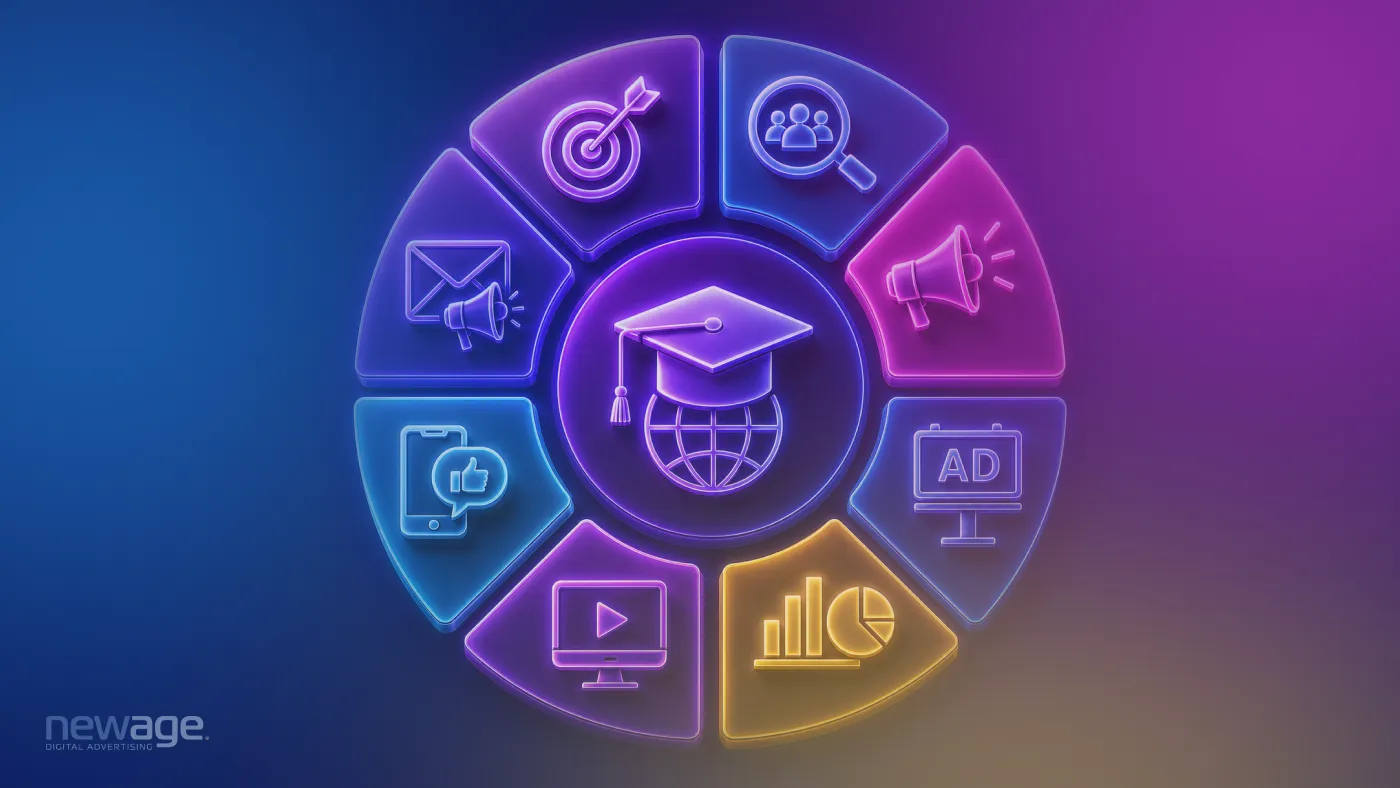
When developing the program, it was important for us not to reduce learning to a set of tools or isolated topics. Instead, we built it as a structured learning framework — moving from a foundational understanding of marketing to practical work with advertising.
At the beginning, we focused on the fundamentals: understanding audiences in advertising campaigns, seeing marketing as a system, and mapping the user journey toward purchase. This is the level where people begin to understand why certain decisions are made in the first place and how advertising fits into the bigger picture.
From there, we moved into practice — working with advertising platforms, launching campaigns, and engaging with existing demand. Step by step, we introduced more advanced layers: audience work, optimization, and understanding what really matters throughout the process.
Analytics was treated as a core part of the learning process, not as an additional topic. The focus was on understanding results: reading data correctly, seeing what is happening inside campaigns, and making more informed decisions from there.
Ultimately, for us, this course was never about “what exactly to learn.” It was about how to think in digital and how to approach advertising as part of a larger marketing system.
What mattered most to us
One of our core priorities was not to teach people how to work with buttons or isolated tools. That kind of approach becomes outdated quickly and rarely leads to a real understanding of the process.
Instead, we focused on the logic behind the work: how decisions are made, what they are based on, and how they ultimately influence results. It was important for us to show the connection between actions, data, and what the business actually gains in the end.
In our view, this is the real foundation of working in digital — not a collection of tools, but the ability to understand what you are doing and why you are doing it.
Results
In the end, the course became more than just a learning experience — for some participants, it became a real starting point for their professional growth. Students completed the program, received certificates, and for some, it already turned into the next step toward working with digital in practice.
Following the course, we offered internships at newage. to three students. For us, this was an important indicator that the learning process had successfully translated into real professional practice. Some of them have already completed their internships and become full members of the team.
The course also brings practical value for us as an agency. It helps us connect with specialists early in their development, understand how they think, and build future collaboration more naturally — from internships to long-term teamwork.
For us, this course is much more than a standalone educational project. We genuinely believe that the growth of the market begins with strong specialists who understand marketing logic, know how to work with data, make informed decisions, and take responsibility for results.
That is why we see education as a real investment in the development of the digital market as a whole. And it is especially valuable for us to see that this approach is already creating meaningful results — both for the students and for the professional environment around them.


Get deeper into digital!
Subscribe to the newage. digital digest and receive exclusive bonus content