
September 2, 2026
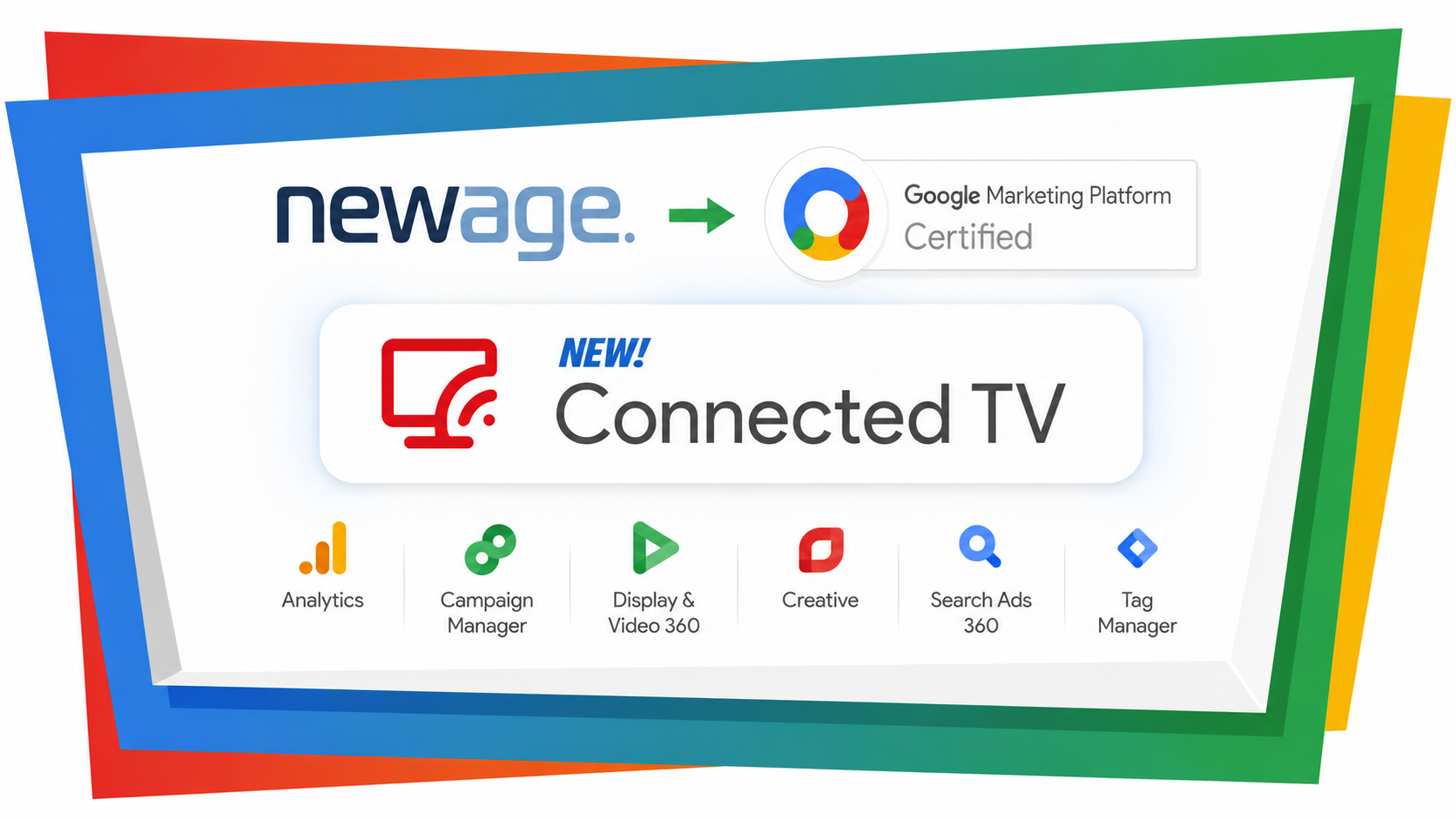
The newage. team has earned a new Google Marketing Platform product certification — Connected TV Certification.
It confirms the team’s practical expertise in Connected TV, from planning and launching CTV campaigns to optimization, frequency management, and performance measurement.
To earn the certification, newage. demonstrated its team expertise and presented Google with two real-world projects that integrated Connected TV into comprehensive media campaigns. Google evaluated the practical application of Display & Video 360 capabilities, technical implementation, approaches to planning and optimization, and the impact of the solutions on campaign objectives.
But what exactly is Connected TV, and how does CTV advertising differ from traditional TV and other forms of digital advertising? Let’s take a closer look.
What Is Connected TV and How Does CTV Advertising Work?
Connected TV (CTV) refers to a television or a device connected to a TV that allows users to stream video content over the internet. Google defines CTV devices as Smart TVs, streaming devices such as Apple TV, gaming consoles, and set-top boxes.
Closely related to CTV is OTT (Over-the-Top). While CTV refers to the device on which content is viewed, OTT describes the delivery of television and video content over the internet. For example, a viewer can watch a streaming service on a Smart TV, with ads served directly within the streamed content.
For advertisers, CTV combines the impact of a large screen with the capabilities of digital advertising. For example, in Display & Video 360, advertisers can buy CTV and OTT inventory, work with available audience segments, apply geographic targeting, manage frequency, and analyze campaign reach.
This is what distinguishes CTV from traditional TV advertising, where ads are tied to linear television broadcasts and traditional TV media planning. At the same time, CTV is not the same as standard online video advertising. Digital video ads can appear across websites, apps, YouTube, and other environments on smartphones and computers, while CTV focuses specifically on television screens and streaming environments. DV360 also provides different buying and campaign setup options for these types of inventory.
What Does Connected TV Offer Advertisers?
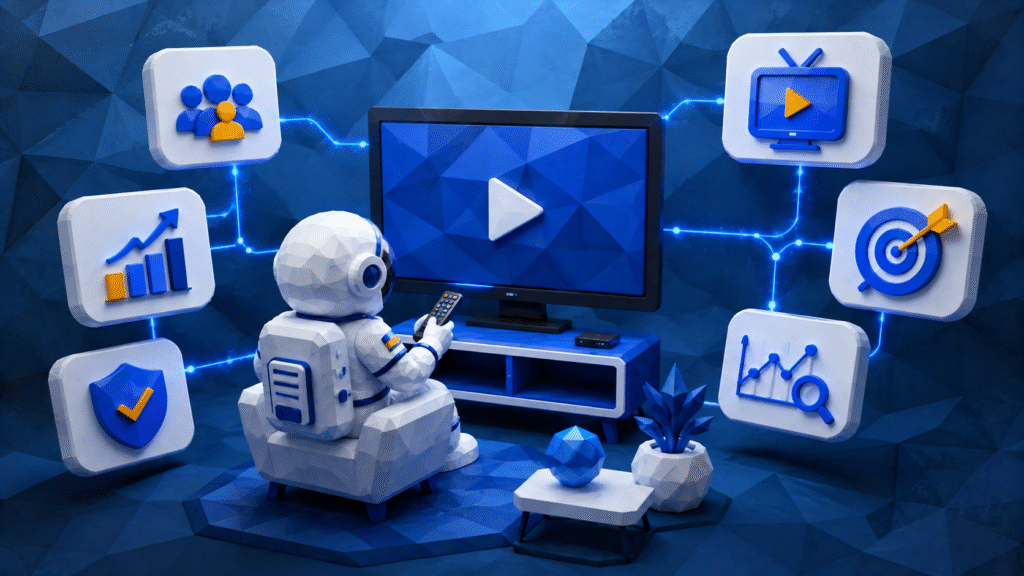
Connected TV combines the impact of the large TV screen with the capabilities of digital advertising, including audience targeting, frequency management, and performance measurement. Rather than operating as a standalone channel, CTV can become part of a broader cross-screen strategy alongside YouTube, display, and other digital formats.
Incremental Reach on Large Screens
CTV can extend a digital campaign to users who consume content on Smart TVs and other connected devices. This creates an opportunity to generate incremental reach — reaching additional audiences beyond those the brand already connects with on smartphones and computers.
Cross-Screen Frequency Management
Throughout the day, the same user may encounter a brand’s advertising on a smartphone, laptop, YouTube, and Connected TV. That is why the advertiser’s goal is not simply to increase the number of impressions, but to control the overall frequency across different screens.
In DV360, CTV can be integrated into a cross-screen frequency management strategy alongside other digital activity. This helps advertisers use the large screen to generate additional reach without creating excessive frequency among users who have already seen the ads on other devices.
Audience Targeting
Another advantage of CTV is the ability to apply a digital approach to audience targeting. Depending on the available inventory and campaign settings, advertisers can work with different audience signals and build a consistent targeting strategy across CTV and other digital environments.
For example, newage. projects used Custom Audiences, Combined Audiences, affinity and demographic signals, as well as Floodlight-based remarketing. This made CTV part of the broader audience strategy rather than an isolated TV placement.
Performance Measurement
CTV can also be evaluated within the context of the entire media campaign. In addition to standard video advertising metrics, it is important to analyze unique and incremental reach, frequency, video completion, audience overlap, as well as what happens after users are exposed to an ad.
This approach makes it possible to assess not only whether an ad was delivered on Connected TV, but also the role CTV plays in the overall performance of a cross-screen campaign.
What Does Google Marketing Platform Connected TV Certification Mean?
Connected TV Certification is a Google Marketing Platform product certification at the company level, rather than an individual certification held by a single specialist. It confirms that a company has the team, expertise, and practical experience required to work with the relevant Google Marketing Platform product area.
As part of the certification process, Google evaluated several aspects, including the team working with Display & Video 360 and specialists who hold the relevant individual certifications.
Another key part of the evaluation was hands-on experience with Connected TV. To demonstrate this expertise, the newage. team presented Google with two real-world projects involving CTV.
Earning the Connected TV Certification therefore confirms not only the team’s knowledge of Google Marketing Platform tools, but also its ability to apply them in real CTV campaigns — from strategy and technical implementation to optimization and performance measurement.
You can view newage.’s current product certifications in our official Google Marketing Platform Partner Directory profile.
How newage. Earned the Connected TV Certification
To earn the Connected TV Certification, the newage. team presented Google with two real-world projects in which Connected TV was used as part of comprehensive media campaigns.
Although the two projects had different business objectives and structures, they were built around the same core principle: we approached Connected TV not as an isolated advertising channel, but as part of an integrated cross-screen ecosystem.
CTV as Part of a Cross-Screen Strategy
In our projects, Connected TV complemented the core video and display activity. Its role was to add a high-impact touchpoint on the large screen, extend campaign reach, and at the same time remain integrated into the overall campaign strategy.
That is why CTV planning, targeting, frequency management, measurement, and optimization were coordinated with other digital video activities in DV360. This approach allowed us to evaluate not just the performance of an individual placement, but CTV’s contribution to overall cross-screen reach and audience engagement.
Reach and Frequency Planning
The role of Connected TV was defined at the campaign planning stage. To support this process, the team used TV Reach Planner to estimate potential unique reach and effective frequency for CTV, forecast the available incremental audience, and compare different reach and frequency scenarios.
This made it possible to assess, both before and during activation, whether CTV was genuinely extending campaign reach or primarily overlapping with users who could already be reached through digital video. Based on these insights, the team could determine the role and appropriate share of CTV inventory within the overall media mix.
A Unified Approach to Audiences
CTV did not require a separate audience strategy. Across the projects, the team applied a consistent approach to audiences across Connected TV and other digital environments.
Depending on the campaign objectives, this included Custom Audiences, Combined Audiences, affinity and demographic signals, as well as Floodlight-based remarketing. This helped maintain a consistent audience strategy regardless of the screen on which the advertising contact occurred.
Combining CTV with Other Video Formats
Connected TV was also part of a broader mix of video formats. Across the projects, CTV & OTT were combined with In-Stream, Non-Skip, Shorts, Bumper, Target Frequency, and Demand Gen.
CTV provided a high-impact touchpoint on the large screen, while other formats created additional touchpoints on personal devices, helped maintain the required frequency, and continued communication with users. For example, shorter formats could reinforce the message after exposure to longer-form video, while Demand Gen could complement awareness activity with campaigns focused on driving further user actions.
Cross-Screen Frequency Management
When a single campaign reaches users across smartphones, computers, and Connected TV, adding another screen should not automatically mean serving more impressions to the same user. That is why managing frequency across different environments was an important part of our approach.
Using DV360 capabilities, the team coordinated frequency across CTV and other digital video activities. This helped use CTV to generate incremental reach while controlling excessive exposure among users who had already seen the ads on other devices.
A Unified Measurement Framework
CTV was not evaluated separately from the rest of the campaign. The goal was to understand what incremental value the large screen contributed to the overall media strategy.
The team therefore analyzed unique and incremental reach, frequency distribution, audience overlap with other video activities, completion and view-through metrics, as well as user behavior following ad exposure. These insights were used not only for final performance evaluation but also to further optimize CTV delivery and adjust its role within the overall media mix.
This combination of planning, a cross-screen approach, audience strategy, frequency management, and comprehensive measurement formed the foundation of the projects that newage. presented to Google as part of the Connected TV Certification process.
What Tools Does newage. Use for Connected TV in DV360?
Working with Connected TV in Display & Video 360 involves much more than simply buying CTV inventory. To plan, launch, and evaluate campaigns, the newage. team uses a range of DV360 tools that support reach, frequency, audience targeting, and measurement within a unified cross-screen strategy.
| Tool | How We Use It |
| TV Reach Planner | Forecasting potential CTV reach and frequency and estimating incremental audiences |
| CTV & OTT Inventory | Serving video ads across Connected TV and streaming environments |
| Frequency Management | Controlling and coordinating ad frequency across CTV and other screens |
| Unique Reach | Measuring audience reach and the contribution of different inventory types to overall reach |
| Custom & Combined Audiences | Building and refining audiences based on available signals and targeting options |
| Floodlight | Connecting ad exposure with subsequent user actions and building remarketing audiences |
| Video Reach Campaigns | Managing reach and frequency objectives with Efficient Reach and Target Frequency |
Using these capabilities together allows us to treat CTV not as a standalone placement, but as an integrated part of the broader digital video ecosystem.

What Approach to Connected TV Do We Consider Effective?
Our experience with CTV shows that Connected TV works best not as a standalone advertising channel, but as part of a cross-screen media strategy. Its role in the media mix should be defined according to the objectives of each campaign — whether that means generating incremental reach, maintaining effective frequency, strengthening brand visibility, or creating a high-attention touchpoint on the large screen.
At the same time, it is important to evaluate not only CTV performance in isolation, but also how it interacts with other video formats and screens. In the projects presented for certification, CTV delivered the greatest value when combined with YouTube — extending reach on large screens, complementing existing digital touchpoints, and helping manage frequency across devices.
That is why, for us, effective Connected TV planning does not start with the question “How much budget should we allocate to CTV?” Instead, it starts with defining CTV’s role within the overall media strategy: what incremental audience it can reach, how it will interact with other channels and formats, and how we will measure its contribution to overall campaign performance.
Connected TV with newage.
Earning the Google Marketing Platform Connected TV Certification confirms the newage. team’s practical experience in planning, launching, optimizing, and measuring CTV as part of comprehensive digital campaigns. For us, Connected TV is not an isolated channel, but another tool for building an effective cross-screen media strategy.
If you are considering Connected TV as part of your media strategy, the newage. team can help you assess potential reach, define CTV’s role in your media mix, plan and launch campaigns through Display & Video 360, and build a measurement framework to evaluate their performance.


Get deeper into digital!
Subscribe to the newage. digital digest and receive exclusive bonus content