


Every day, users watch dozens of videos on YouTube, TikTok, and Facebook — and at that very moment, brands have a unique opportunity to tell their story, capture attention, and drive action. But in an environment where user attention lasts only a few seconds, the success of a video campaign directly depends on the quality of the creative.

Advertising creatives are visual or video formats that convey the idea of a brand, product, or service. The extent to which a creative resonates with the audience’s interests, evokes emotion, and clearly delivers the message determines not only reach but also outcomes — purchases, leads, or subscriptions.
To help marketers create truly effective Google ads, the Google team developed a simple yet powerful framework — the ABCD method. This approach is based on the analysis of thousands of successful video campaigns and helps improve the performance of creatives in digital video advertising.
In this article, we’ll explore what ABCD is, how to use it, and why it has become the gold standard for building effective Google ads.
What is ABCD — Google’s method for effective video advertising
Viewers decide the fate of a video within the first few seconds: watch it or hit “Skip.” For brands, this means every frame matters. To help marketers adapt, Google introduced the ABCD principle — a set of recommendations designed to make video ads more engaging and effective.
According to Google, applying the ABCD framework when creating video ads can deliver significantly better results:
- up to +30% increase in the likelihood of short-term sales,
- up to +17% improvement in long-term brand lift.
What does the ABCD acronym stand for?
The ABCD method consists of four key principles:
A — Attract: capture attention from the very first seconds
The opening moments of a video are critical. A brand’s task is to grab the viewer’s attention immediately. This can be achieved with an unexpected shot, a strong visual hook, or an emotionally charged context.
Example: instead of starting the video with a logo, begin with dialogue, dynamic action, or a provocative scenario.
B — Brand: showcase your brand as early as possible
Brand identification should happen early and clearly. This doesn’t necessarily mean showing a logo — it could be the product in use, signature colors, recognizable characters, or a distinctive brand sound.
Tip: your brand should appear within the first 5 seconds, even if it’s just a visual cue.
C — Connect: build an emotional bond with the viewer
This stage is about making the ad not just noticeable but relatable. When viewers see a situation that resonates with their own experience and understand how the product adds value in real life, a genuine emotional connection is formed.
That’s why effective storytelling, authentic character reactions, and everyday scenarios work far better than abstract or generic messages.
D — Direct: drive action
To wrap up, clearly indicate what you expect the viewer to do — visit the website, download the app, or use a discount. The call-to-action (CTA) should be visual, spoken, or interactive — and ideally shown more than once.
Boost your CTA by combining text, graphics, and voiceover for maximum impact.
How does ABCD work in Google Ads and YouTube?
The ABCD method works best in longer video formats, such as YouTube In-stream Ads (15 seconds or more). In this format, you can fully apply all four principles: grab attention, showcase the brand, build an emotional connection, and add a clear call to action.
Shorter formats (like Bumper Ads or YouTube Shorts) serve a different purpose: they are more effective for boosting brand awareness or reminding audiences, rather than delivering the full ABCD structure. They complement longer videos rather than replace them.
Google has integrated ABCD into its Creative Guidelines, making it not just a recommendation but a standard for brands aiming to create ads that truly work. At the same time, it’s important to note that ABCD doesn’t make all creatives look the same.
Instead, it provides a framework to structure video content for effectiveness, while leaving plenty of room for unique ideas, styles, and brand identity. That’s why even when following ABCD principles, you can still produce advertising that stands out and is memorable.
Why does this matter for marketers?
- ABCD helps structure the creative process from ideation and scripting to production.
- It’s a universal formula that works for both large brands and small businesses.
- The ABCD method from Google can be applied not only to video but also to visual creatives, stories, and social media content.
Most importantly, ABCD is not just a video template but a strategic approach that combines creativity, human psychology, and data. This allows you to create ads that truly work — sparking emotion, making logical sense to the viewer, aligning with their behavioral patterns, and being measurable with clear business outcomes.


Why does ABCD work: scientific data and research
The ABCD method is not just a creative formula but a strategically validated approach, supported by extensive research from companies like Google, Ipsos, Kantar, and Nielsen. The elements of this model align with real consumer behavior patterns in the digital environment.
Google Research: What does the data show?
In partnership with leading analytics agencies, Google analyzed more than 17,000 video campaigns to identify the patterns that drive advertising effectiveness. The results were clear:
| Principle | Effect |
| Applying all 4 ABCD elements | +30% increase in likelihood of short-term sales |
| Brand presence within the first 5 seconds | +17% improvement in brand lift |
| Emotional storyline with relatable characters | Stronger brand associations |
| Clear call-to-action (Direct) | Higher CTR and video completion rates |
Behavioral triggers in digital: how viewers respond
The ABCD method incorporates key principles of attention psychology in the digital environment:
- Attract ensures initial attention capture — almost reflexively, before the content is even processed.
- Brand helps the viewer associate the creative with its source, even if they don’t finish watching the video.
- Connect activates emotional memory, which dramatically increases recall.
- Direct drives the final action — the brain looks for this as a “logical closure” to the impression.
These stages not only align with human emotional and cognitive responses but also mirror the digital journey: from impulse → to recognition → to trust → to action.
ABCD as a response to the swipe & skip generation
Today’s audience:
- will scroll past an ad within 1–2 seconds if it doesn’t catch their interest;
- will only remember the brand if it appears at the very start of the video;
- will respond to content they feel an emotional connection with;
- will take action if given a clear, simple message: where to click and why.
ABCD integrates these behavioral patterns into a universal creative framework.
The ABCD method reflects how people actually watch, perceive, and respond to video advertising in the 2020s. It’s built not on guesswork, but on data, psychology, and empirical observation.

How to apply the ABCD principle to different advertising goals
The ABCD method is a universal tool, but its effectiveness depends on how well it is adapted to a specific marketing objective. In Google Ads and YouTube campaigns, three main goals can be distinguished: Awareness, Consideration, and Action.
Awareness: brand recognition
At this stage, the main goal is to make the brand noticeable and memorable. The focus should be on the first two ABCD elements:
- Attract: create a visual or emotional hook that prevents the ad from being skipped.
- Brand: showcase the brand as early as possible — within the first 5 seconds.
Tips for awareness campaigns:
- use bold visuals and dynamic movement;
- apply brand identity (logo, colors, jingle);
- build associations with the product category.
In the Bumper Ads format (6 seconds), the ABCD brand approach works particularly well because it combines quick attention-grabbing with clear brand identification.
Consideration: building interest and trust
The primary goal is to convince the user that the brand or product is worthy of their attention. This stage highlights C (Connect) and B (Brand):
- Connect: the task is not simply to “add emotion,” but to show how the product solves specific problems or fulfills the audience’s needs.
- Brand: the brand should be an integral part of the story, not just a “watermark.”
Tips for consideration campaigns:
- use relatable storytelling (real-life situations the audience can see themselves in);
- highlight value: product demonstrations, authentic reviews, or useful insights;
- work with emotions: trust, humor, empathy.
This is where the ABCD digital approach is especially powerful, as it accounts for the habits of modern users who scroll, skip, and make content choices in just seconds.
Action: call to action
The final stage is about turning attention and emotion into a specific action. Here, D (Direct) plays the key role:
- The CTA must be clear, simple, and repeated.
- Use a combination of graphics, voiceover, and clickable buttons.
Tips for action campaigns:
- encourage app downloads, website visits, or product purchases;
- add urgency (“today only,” “limited offer”);
- test different CTA formats (video button, end screen, voice prompt).
This is how the ABCD method transforms a brand message into effective Google advertising — not only memorable, but also results-driven.
ABCD is a flexible framework that can be adapted to any marketing goal. Awareness builds recognition, Consideration builds trust, and Action drives sales. And all of it works thanks to a clear structure backed by Google’s data.

Video ABCD: how Google envisions the perfect video creative
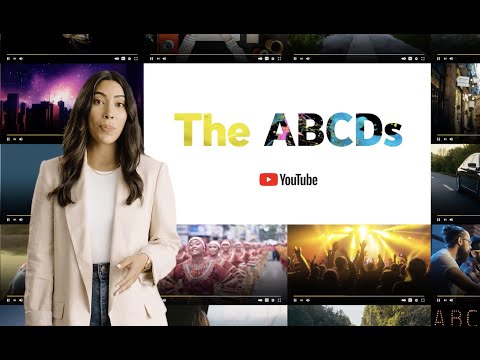
Google emphasizes that the quality of video creative directly impacts advertising effectiveness. That’s why the Video ABCD approach was developed — combining user behavior analytics with best practices from YouTube and Google Ads. By following these guidelines, you can create ads that not only capture attention but also drive conversions.
The first 5 seconds are critical
Google’s algorithms and research prove it: viewers decide whether to stay with a video ad within the very first seconds.
- Start with dynamic energy.
- Add an unexpected visual or narrative hook.
- Show the product or brand as early as possible.
If the viewer isn’t engaged in the first 5 seconds, the chances of continued viewing drop dramatically.
Mobile-first approach
Most users watch ads on their smartphones. That’s why Video ABCD is designed with mobile formats in mind:
- Close-ups instead of wide shots.
- Bright, high-contrast colors for better visibility.
- Subtitles and graphic elements, since many viewers watch without sound.
Rule of thumb: your creative should be clear and effective even in mute mode.
Show the brand from the very start
Successful campaigns introduce the brand right at the beginning of the video. This doesn’t always mean displaying a logo — sometimes it’s enough to include elements that are strongly associated with the company:
- the product in the hero’s hands;
- recognizable brand colors or characters;
- a signature sound or catchphrase tied to the brand;
- distinctive attributes — for example, delivery couriers with oversized backpacks, scooters, or branded packaging.
Golden rule: the brand should appear within the first 5 seconds, so the viewer recognizes it even during a quick skim.
Call-to-Action — the double effect
Every video should end with a clear Call-to-Action (CTA). The most effective approach is to combine both visual and verbal formats:
- on-screen text + voiceover;
- clickable button + animated element;
- a repeated CTA on the end screen.
When users both see and hear the CTA, conversion rates increase significantly.
Video ABCD is a set of rules that blends creativity with Google’s proven data. By following these principles, you create videos that quickly capture attention, clearly communicate the brand, and drive action.
ABCD Detector: automated evaluation of video creatives based on Google’s principles
The ABCD method helps create effective ad videos, but one question always remains: Does a specific creative actually follow these rules?
That’s exactly why Google introduced the ABCD Detector — an AI-powered solution that analyzes video before launch and identifies its strengths and weaknesses.
What is the ABCD Detector?
ABCD Detector is a tool from the Google Solutions Library that automatically evaluates video creatives against the four principles: Attract, Brand, Connect, and Direct.
- It’s powered by Google Cloud Video Intelligence API, which recognizes scenes, faces, text, and logos.
- It leverages an LLM (Gemini) to interpret the data and generate an assessment across all four criteria.
- It enables marketers to understand whether a video meets the standards of effective Google advertising before spending on media.
How does the ABCD Detector work?
- Upload the video → the tool analyzes it frame by frame.
- Element recognition → detects brand presence, text, characters, and key scenes.
- AI evaluation → the model compares the data with patterns from successful creatives.
- Report → highlights strengths and weaknesses:
- Is there a hook at the start (Attract)?
- Is the brand visible in the first seconds (Brand)?
- Is there an emotional connection (Connect)?
- Is there a clear CTA (Direct)?
Benefits for digital teams
- Budget savings — you don’t waste money testing “raw” creatives. The tool lets you evaluate a video before the campaign even starts: simply upload it to the system.
- Fast feedback — analysis results are available before launch.
- Transparency — it’s clear what exactly needs improvement (e.g., the brand appears too late).
- A/B testing — you can create several versions of a video and instantly see which one is closer to the ideal ABCD model.

Case study: how LOKO optimized its creative with ABCD Detector
At the ROMI 2025 conference, the newage. team shared an illustrative case with the brand LOKO.
The initial video, which was planned for launch, scored only 57% (15 out of 26 points) in the ABCD Detector evaluation system. The analysis showed that:
- the opening was too weak and failed to grab attention (Attract),
- the brand appeared too late (Brand),
- there was no clear call-to-action (Direct).
Thanks to these insights, the video was reworked before the campaign launch. In the final version:
- the opening became more dynamic and instantly grabbed attention,
- the brand was clearly visible within the first seconds,
- a clear and repeated CTA was added.
The result 81% (21 out of 26 points) and a fully optimized creative aligned with ABCD standards.
The most valuable part is that all these changes were made before the campaign even started. This allowed the brand to:
- avoid spending on testing “raw” versions,
- save budget,
- go to market immediately with an optimized, competitive video.
This case clearly demonstrates that ABCD Detector is not just “evaluation for the sake of evaluation,” but a practical tool that truly helps improve the effectiveness of creatives and media investments.
You can read more in the newage. article.
With the ABCD Detector, the ABCD principle becomes even more powerful: it’s no longer just a methodology but a practical AI tool for marketers’ day-to-day work.

Case study: how Old Spice applied ABCD in YouTube advertising
One of the most famous examples of applying the ABCD principle in video advertising is the Old Spice campaign. Its commercials went viral thanks to a mix of humor, dynamic pacing, and strong brand positioning. Let’s break down how Google’s formula worked here.
Attract — grab attention
The spot opens with an unexpected dialogue and rapid scene changes. Dynamic editing and absurd yet humorous situations instantly capture the viewer’s attention.
What worked well: a strong “hook” in the very first seconds.
What could be adapted: in modern digital campaigns, it’s worth considering mobile formats with tighter framing.

Brand — brand in the frame
The Old Spice brand appears almost immediately: the product is shown in the hero’s hands and emphasized again at the end. Brand identity (logo, colors, the slogan “Smell like a man, man”) is woven into the storyline.
What worked well: smooth integration of the brand into the content without feeling intrusive.
What could be adapted: placing the logo earlier — within the first 5 seconds, as Google recommends.
Connect — emotional connection
Humor, a charismatic hero, and exaggerated situations create a strong emotional reaction. The audience doesn’t just watch the ad — they remember the brand as fun, bold, and youthful.
What worked well: the video makes people laugh and positions the brand as “one of us.”
What could be adapted: adding more relatable, everyday scenarios could broaden its appeal to a wider audience.
Direct — call to action
The ad closes with a clear brand message and a strong product demonstration. There’s an explicit hook for the viewer: “Choose Old Spice to feel confident.”
What worked well: strong final focus on the brand and message.
What could be adapted: make the CTA even more specific — for example, “Buy now online” or “Find it at your nearest store.”
Takeaways for digital teams
- Old Spice masterfully applied the ABCD formula: the ads went viral, the brand became highly recognizable, and the audience was deeply engaged.
- For today’s digital environment, however, it’s essential to adapt the format with a mobile-first approach — tighter framing, subtitles, and interactive CTAs.
- Applying ABCD in Google Ads allows brands to replicate this success: combining attention, emotion, brand, and action in a single video.

What’s next: how to create your own ABCD creatives
The ABCD method may look simple on paper, but it requires a systematic approach in practice. To create video ads that are both creative and effective, it’s important to follow a clear step-by-step process.
Algorithm for creating an ABCD creative
- Brief
Define your marketing objectives (Awareness, Consideration, Action), target audience, and key message.
- Idea
Develop a concept that fits the Attract principle: a hook that immediately grabs the viewer’s attention.
- Script
Outline the video second by second, integrating the Brand within the first 5 seconds and building Connect through an emotional storyline.
- Editing
Use a mobile-first approach: close-up shots, bright colors, and subtitles. Don’t forget to include the final Direct — a clear call to action.
- Testing
Run A/B tests with multiple variations: check which creative grabs more attention, is better remembered, and drives stronger action.
How to check if your creative meets ABCD?
- A (Attract): Does it grab attention in the first seconds?
- B (Brand): Is the brand visible within 5 seconds?
- C (Connect): Does it trigger emotion and resonate with the audience?
- D (Direct): Is there a clear, straightforward CTA?
If most of the checklist questions get a positive answer, your creative is moving in the right direction. At the same time, it’s important to remember that the ABCD evaluation consists of 26 points, with each block carrying its own weight: 8 for Attention, 6 for Brand, 6 for Connect, and 6 for Direct. This means you can score highly in one area but underperform in another. The real effectiveness of advertising comes from balancing all elements.
The ABCD formula always works, but to achieve the best results, it must be properly adapted to the format, objective, and audience.
Test the method in your campaigns together with the newage. team, and create Google ads that not only capture attention but also drive measurable results.
FAQ: common questions about the ABCD method
What is ABCD in advertising?
ABCD is Google’s framework for creating effective video creatives. It includes four principles: Attract (grab attention), Brand (show the brand), Connect (build an emotional connection), and Direct (drive action).
What’s the difference between ABCD and AIDA?
AIDA (Attention, Interest, Desire, Action) is a classic marketing formula that describes the customer journey from awareness to purchase. ABCD, on the other hand, is a more modern, data-driven approach developed by Google. It reflects the behavior of today’s digital audiences and is tailored for mobile-first content.
How can the ABCD method be used in Google Ads?
In Google Ads, the ABCD principles can be applied across all video formats: in-stream, bumper ads, YouTube Shorts, and Performance Max. The key is to grab attention in the first seconds, show the brand early, build an emotional connection, and deliver a clear CTA.
What is Video ABCD?
Video ABCD is the adaptation of the ABCD method for video advertising. Google recommends focusing on the first five seconds, designing with a mobile-first approach using close-ups and subtitles, showing the brand immediately, and reinforcing the call to action in both visual and verbal form.